
Let’s address the elephant—or rather, the footwear—in the room.
Shoes in the living room. It’s a reality many of us face but few discuss openly. Maybe you live in a culture where outdoor shoes come off at the door (hello, cozy sock life!). Perhaps your entryway is nonexistent, and that pile by the front door inevitably migrates toward the couch. Or maybe you’re a shoe lover whose collection has officially outgrown the bedroom closet.
Whatever the reason, shoes have landed in your living room. The question isn’t whether they should be there—it’s how to store them beautifully.
Welcome to the art of the living room shoe rack, where function meets fashion, and your footwear becomes part of the decor.
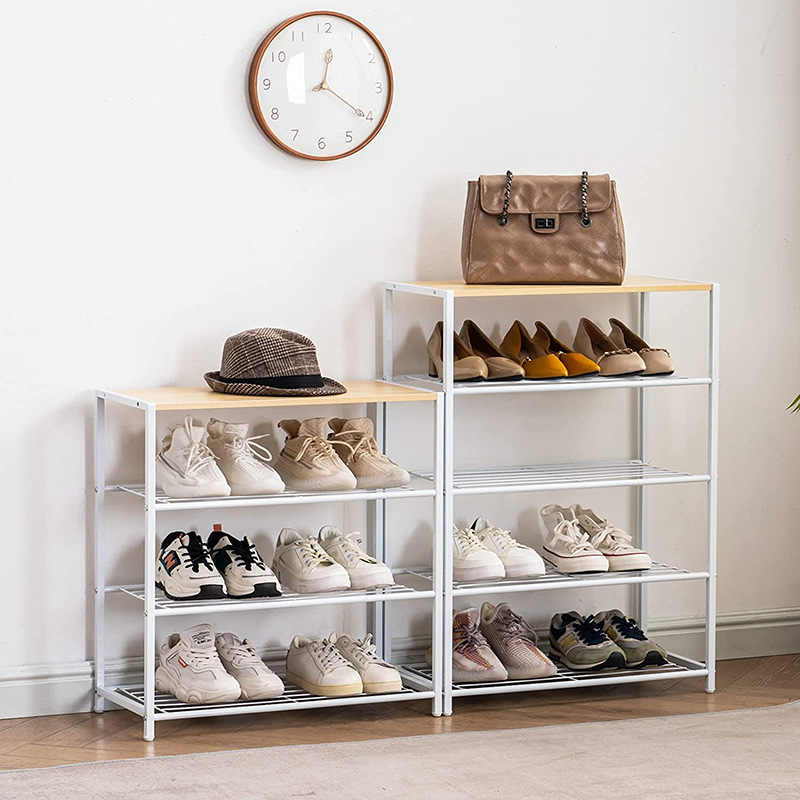
Part 1: The Case for Living Room Shoe Storage
Before we judge the shoes in the living room, let’s understand why they end up there:
The No-Shoe Household: Many Asian, Scandinavian, and European homes practice removing shoes at the entrance. But where do they go? Often, the nearest available space is… the living room corner.
The Entryway Challenge: Not every home has a mudroom or spacious foyer. In apartments and smaller houses, the front door opens directly into the living room. Shoes must land somewhere, and that somewhere is visible to everyone.
The Collection Overflow: Sneakerheads, boot lovers, and heel enthusiasts know the pain. When the bedroom closet maxes out, the living room becomes the gallery.
The Daily Rotation: Shoes you wear most often deserve convenient access. If you grab your trainers for a walk and your loafers for errands, keeping them near the action makes sense.
The solution isn’t banishing shoes—it’s storing them with intention.
Part 2: Why Regular Shoe Racks Fail in Living Rooms
You might be thinking, “Can’t I just use that wire rack from the entryway?” Please don’t. Here’s why standard shoe storage falls short in living spaces:
The Visual Clutter Problem: Open racks display every shoe like products in a store. In an entryway, that’s functional. In your living room, it’s chaos.
The Style Mismatch: Plastic-coated wire and basic metal shelves scream “utility” not “hospitality.” They belong in garages, not gathering spaces.
The Scale Issue: Many shoe racks are designed for narrow entryways. In a living room, they look puny against sofas and coffee tables.
The Dust Factor: Living rooms collect more dust and pet hair than entryways. Open shoes become dust magnets.
The living room demands a different approach—one that prioritizes aesthetics alongside accessibility.
Part 3: The Living Room Shoe Rack – Types That Actually Work
Here are shoe storage solutions designed to blend seamlessly with your living room decor:
1. The Console Table Transformer
Best For: Entryway-less homes where the front door opens to the living room
The Concept: A narrow console table against the wall serves dual duty—decorative surface above, shoe storage below.
How It Works:
- Top surface holds keys, mail, a lamp, or decorative objects
- Beneath, stylish baskets or bins conceal shoes
- Choose a console with a lower shelf or enough clearance for baskets
Style Tip: Match the console to your existing furniture. A mid-century modern piece with woven baskets creates warmth and cohesion.
2. The Storage Ottoman or Bench
Best For: Seating plus hidden storage in one compact piece
The Concept: A upholstered bench or ottoman with a lift-top reveals shoe storage inside.
Why It Works:
- Provides a place to sit while putting on or removing shoes
- Soft upholstery adds comfort and texture to the room
- Shoes disappear completely when the lid is closed
Style Tip: Choose a fabric that complements your sofa or adds a contrasting accent color.
3. The Closed Cabinet with Style
Best For: Larger collections and a furniture-forward approach
The Concept: A dedicated cabinet that looks like any other living room furniture but contains shelves designed for shoes.
Features to Look For:
- Adjustable or tilted shelves that accommodate various shoe heights
- Doors that conceal everything when closed
- Top surface for decor, drinks, or a lamp
Style Tip: Consider a cabinet with glass doors if you want to display special pairs—but keep the everyday shoes behind solid doors.
4. The Low Bookshelf Reinvention
Best For: The sneaker collector who wants shoes on display
The Concept: A shallow, low-profile bookshelf (think IKEA Kallax on its side) becomes a shoe gallery.
How to Style It:
- Use cubes or compartments to display sneakers like art
- Add LED strip lighting to highlight special pairs
- Mix in books, plants, or small sculptures between shoes
Pro Tip: Keep this look intentional by limiting displayed pairs to your absolute favorites. Rotate seasonally.
5. The Modular Cube System with Bins
Best For: Families and flexible storage needs
The Concept: Cube-style shelving with a mix of open compartments and fabric or basket bins.
Why It Works:
- Bins hide less attractive shoes while open cubes display nicer pairs
- Kids can have their own labeled bins for independence
- System grows and changes with your needs
Style Tip: Choose bins in a consistent color or material for visual harmony. Woven seagrass or linen-look fabrics add texture.
6. The Bench with Under-Seat Baskets
Best For: Creating a dedicated “landing zone” in the living room
The Concept: A long bench against one wall with individual baskets tucked underneath.
How It Works:
- Bench provides seating and defines the shoe zone
- Each family member gets their own basket
- Shoes slide into baskets—no bending to organize
Style Tip: Add cushions to the bench for comfort and color. Use matching baskets for a unified look.
Part 4: Making It Work – Practical Considerations
Beyond choosing the right piece, here’s how to make living room shoe storage functional and beautiful:
The Clean Feet Protocol
Living room shoes should be clean. Consider:
- Keeping a small mat nearby for wiping soles
- Designating “indoor only” shoes for cozy days
- Using shoe trays underneath racks to catch dirt
The Rotation System
Not all shoes need to live in the living room year-round:
- Daily wear: Current favorites in accessible storage
- Seasonal shoes: Boots in winter, sandals in summer—rotate accordingly
- Special occasion: Keep in bedroom closets, retrieved as needed
The Guest Consideration
If guests will see your shoe storage:
- Provide a small basket for their shoes if they remove them
- Ensure your rack doesn’t block traffic flow
- Keep the area tidy—a messy shoe zone reflects on the whole room
The Odor Management
Living rooms are for relaxing, not smelling feet:
- Use cedar blocks or lavender sachets in bins
- Let shoes air out before storing
- Consider a small, discreet dehumidifier if moisture is an issue
Part 5: Styling Your Living Room Shoe Rack
The difference between “shoe storage” and “design feature” comes down to styling:
On Top of the Unit
Whatever rack you choose, the top surface is prime decorating real estate:
- A stack of beautiful coffee table books
- A small tray for remotes or coasters
- A sculptural vase or ceramic object
- A trailing plant like pothos or string of pearls
- A framed photo or small artwork
Around the Unit
Integrate your shoe storage into the room:
- Lean a floor mirror nearby to check outfits
- Add a small rug to define the zone
- Position a floor lamp to highlight the area
- Hang wall art above to draw the eye upward
Inside the Storage
Even concealed shoes can be organized beautifully:
- Use shoe trees to maintain shape
- Arrange by color for visual satisfaction when opened
- Label bins if multiple people share the space
- Store boots upright with boot shapers
Part 6: Real-Life Scenarios – Solutions for Every Situation
The Small Apartment Dweller
Challenge: 500 square feet, no entryway, shoes everywhere
Solution: A narrow console table with baskets beneath. Top surface holds keys and mail. Baskets hide daily shoes. Bonus: The table defines the “entry” zone in your open floor plan.
The Sneaker Collector
Challenge: 30+ pairs of coveted sneakers, bedroom closet overflowing
Solution: A low, wide bookshelf styled as a gallery wall. Display favorite pairs with LED lighting. Store less-worn pairs in uniform boxes on higher shelves. Mix in art and plants.
The Family of Four
Challenge: Everyone’s shoes by the door, constant chaos
Solution: A long bench with individual baskets for each person. Teach kids to use their own basket. Add a boot tray underneath for wet or muddy days. The bench provides seating for shoe removal.
The Minimalist
Challenge: Few shoes but want them hidden completely
Solution: A beautiful closed cabinet that doubles as a sideboard. Top surface styled with minimal decor. Inside, simple shelves hold each pair neatly. Shoes are accessible but invisible.
The Multi-Use Living Room
Challenge: Space serves as living, dining, and entry
Solution: A storage ottoman near the door serves triple duty—shoe storage inside, seating for shoe removal, and coffee table surface when needed.
Part 7: The Cultural Context – Shoes in the Living Room Around the World
Understanding different approaches can inspire your own solution:
Japan: Shoes are removed at the genkan (entryway), which is physically lower than the main floor. Storage is built into this transition space.
Scandinavia: Mudrooms (called “slojd” or similar) are common, but in apartments, dedicated shoe cabinets near the entrance are standard.
Middle East: It’s customary to remove shoes before entering living areas. Beautiful carved or inlaid shoe cabinets are often placed just inside the door.
North America: Shoes worn indoors are more common, but mudrooms and entryway closets are valued features.
Your Home: Your solution can blend the best of these traditions—respecting cleanliness while embracing your lifestyle.
Part 8: Maintenance – Keeping It Beautiful
A living room shoe rack requires more upkeep than its entryway cousin:
Weekly
- Wipe down the rack surface with appropriate cleaner
- Vacuum or sweep underneath and around
- Spot-clean any fabric bins or cushions
Monthly
- Remove all shoes and vacuum inside storage
- Check for any needed repairs or loose hardware
- Rotate shoes to redistribute wear
Seasonally
- Deep clean all shoes before storing
- Swap seasonal footwear (boots out, sandals in)
- Reassess the system—does it still work for your life?
- Refresh styling on top of the unit
Part 9: The Psychology of Visible Shoes
Why does seeing shoes in the living room bother some people and delight others?
For the bothered: Shoes carry outside dirt and associations. They represent transition, not relaxation. Keeping them contained signals that the living room is a sanctuary.
For the delighted: Shoes express personality. Collectors see each pair as art or memory. Displaying them adds character and sparks conversation.
The compromise: Contained visibility. Shoes are present but organized—seen when you want, hidden when you don’t.
Conclusion: Your Shoes, Your Space, Your Rules
There’s no universal right or wrong about shoes in the living room. What matters is that your storage solution:
- Fits your space without blocking traffic or overwhelming the room
- Matches your style so it enhances rather than detracts
- Serves your habits by making daily life easier
- Respects your values about cleanliness and comfort
The perfect living room shoe rack isn’t the one in the catalog. It’s the one that makes you smile when you walk in, keeps your favorite pairs accessible, and disappears into the background when guests arrive.
So embrace your reality. If shoes live in your living room, give them a beautiful home. Your feet—and your eyes—will thank you.
